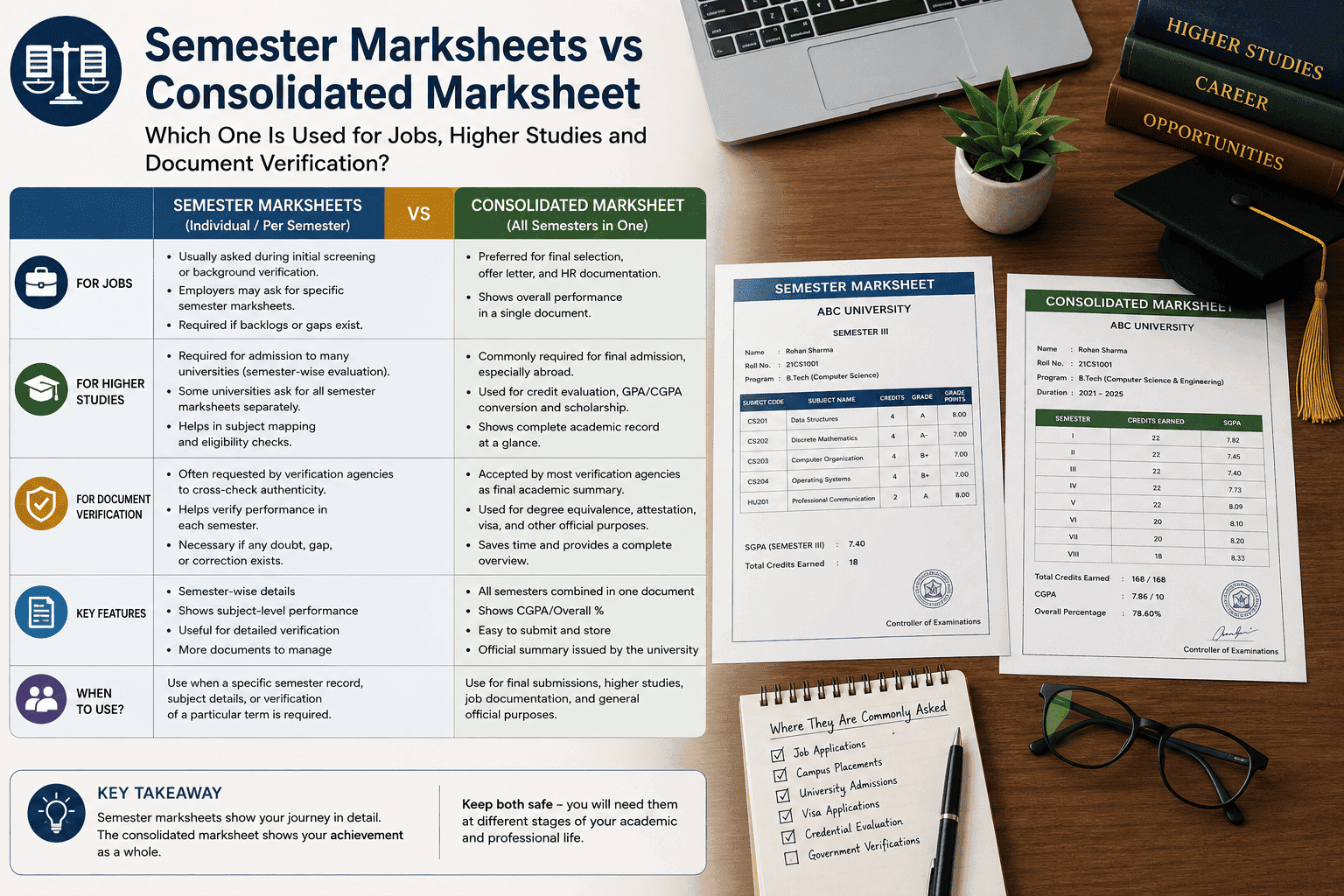
Results day has a way of making even confident students quiet. You check your CGPA, compare it with your friends, and suddenly one number feels bigger than your whole degree. If you are staring at a 9 CGPA and still feeling unsure, that feeling is normal.
The honest answer to is 9 CGPA good in India: yes, it is a strong score, and in most Indian colleges it puts you in a very comfortable position for placements, internships, and many applications. But it is not a magic pass. In India, recruiters still look at branch, backlogs, communication, and how you perform in the test and interview. A 9 helps. It does not replace preparation.
Before we go deeper, here is what you are really asking.
- Does 9 CGPA help in campus placements?
- Will it clear eligibility cut-offs for companies?
- How does it affect government exams and higher studies?
- Is 9 CGPA enough if you have backlogs or weak communication?
- What does 9 CGPA mean in percentage?
What a 9 CGPA actually says about you
A 9 CGPA says you have been consistent. That matters in Indian colleges because many students lose marks in one bad semester, one failed internal, or one project they ignored. A 9 means you have mostly stayed on track across semesters, not just crammed before exams.
On a 10-point scale, 9 CGPA = about 90% if your university uses the simple conversion formula. So if someone asks for your percentage, the rough math is easy: 9 × 10 = 90%. Some universities use their own conversion certificate, so for applications, always check your college rules instead of guessing.
What it does not automatically say is that you are better than every 7.5 or 8 student in interviews. I have seen 9+ students freeze in basic HR rounds. I have also seen 7.2 students get hired because they spoke clearly, solved the coding round, and looked ready to work.
Where it genuinely helps in campus placements
In campus hiring, a high CGPA mainly helps you enter the room. That is the real value. Many companies set a cut-off around 6.0, 6.5, 7.0, or 7.5 CGPA for shortlisting. A 9 CGPA clears those filters comfortably, so you are less likely to be rejected before the process even starts.
For mass recruiters and many service-based IT companies, the first screen is often simple: no active backlog, required percentage/CGPA, and maybe branch eligibility. If you meet that, they shortlist you for aptitude, coding, group discussion, or interview. Your 9 CGPA gives you breathing room here.
For product roles or better-paying off-campus openings, the number helps less than students think. Once you are inside the interview loop, the recruiter wants proof that you can code, explain projects, and handle pressure. A 9 can open the gate, but it does not carry you through it.
If two candidates both clear the cut-off, the one who solves the test and explains their project better gets selected. CGPA stops being the hero very quickly.
The part nobody tells you about shortlisting
In many Indian colleges, eligibility cut-off and final selection are two different things. Students mix them up all the time. A company may ask for 7 CGPA to sit for the drive, but that does not mean everyone with 7 gets selected. It only means you are allowed to compete.
A 9 CGPA helps most in colleges where recruiters use hard filters. That includes companies that receive huge application volume and need a quick way to reduce the crowd. In those cases, the student with 5.9 is out before the aptitude test even starts. The student with 9 gets a chance. That is a real advantage.
One uncomfortable truth: in some tier-1 colleges, almost everyone has strong CGPA, so 9 is no longer a standout. In a top circuit, a 9 may simply mean you are in the safe zone, not the top of the batch. In a tier-2 or tier-3 college, that same 9 can make you one of the stronger academic profiles in the room.
Backlogs, arrears, and the hidden risk
Backlogs matter more than many students admit. A single active backlog can block you from sitting for a company even if your CGPA is 9 on paper. Some recruiters want zero active backlogs. Some accept cleared arrears. Others are strict about never having had a backlog at all. Read the eligibility sheet carefully.
This is where students get caught. They think, “My CGPA is high, I should be fine.” Then the drive starts, and the portal asks whether you ever had a backlog. If you lie, the offer can get cancelled later. If you tell the truth, you may still be fine for many companies, but not all.
If you have a 9 with one cleared backlog, do not panic. You are not finished. But you must target companies with relaxed backlog rules, strengthen your skills, and stop depending on academics alone. The number helps. The history still follows you.
How 9 CGPA plays in off-campus hiring
Off-campus, CGPA matters less than people expect. Recruiters there are often scanning resumes quickly. They want proof of projects, internships, GitHub work, certifications, or visible skills. A 9 CGPA makes your resume cleaner, but it will not save a weak profile.
For a fresher applying outside campus, a good resume with 9 CGPA, one solid project, and one internship looks much stronger than a plain resume with just marks. If you are in CSE, IT, ECE, or even non-core branches, a strong academic record gives you credibility. Then your portfolio does the rest.
There is also a practical edge. Some online application forms ask for percentage instead of CGPA. If your college follows the usual formula, 9 CGPA means around 90%. Use a proper conversion from your university if they issue one. If not, a tool like the CGPA conversion chart helps you check the standard mapping quickly.
Government exams and public sector jobs
For most government exams, CGPA is not the deciding factor. The real selection happens through written exam marks, category rules, age limits, and document verification. Your 9 CGPA does not push you ahead in SSC, banking, railways, or many PSU-style exams once the written stage begins.
Where it can matter is eligibility. Some PSUs and a few technical recruitment processes ask for a minimum percentage in graduation, often around 60% or 65%. A 9 CGPA, if converted properly, clears that comfortably. That means you qualify to apply. It does not mean you will get selected.
For GATE-based PSU routes, the score itself matters far more than your college CGPA once the basic eligibility is met. For UPSC and state exams, your degree is a qualification, not a ranking tool. So yes, 9 CGPA is useful here. Just not in the way anxious students imagine.
Higher studies, MBA, and going abroad
If you are planning an MBA, MS, or study abroad, a 9 CGPA is a strong academic base. Many Indian and foreign universities like seeing consistent marks, especially if your undergraduate record is clean. It shows discipline, and admissions teams do notice that.
Still, different pathways care about different things. For an MBA, entrance scores, work experience, and interview performance can matter more than whether you had 8.8 or 9.2. For MS abroad, projects, SOP, recommendation letters, and subject fit matter a lot. Your CGPA helps the application. It does not carry it alone.
If you want to compare your score across formats, use a simple conversion first: 9 CGPA × 10 = 90%. Then check whether your university gives an official grade sheet or percentage certificate, especially for foreign applications where conversion rules can differ.
What to do next if you have 9 CGPA
Do not sit on the number. Use it. A strong CGPA is useful only if the rest of your profile stops looking empty.
- Keep your backlog status clean. If one is pending, close it fast.
- Prepare one project you can explain in plain English.
- Fix aptitude basics: percentages, ratios, time and work, coding basics if relevant.
- Update your resume with the correct CGPA and percentage conversion.
- Target companies whose eligibility matches your branch and academic record.
If you want to check where your score stands in different grading systems, use the CGPA calculator before putting numbers on your resume or application form. One wrong conversion looks careless, and recruiters notice carelessness fast.
| Situation | What 9 CGPA does for you | What still matters more |
|---|---|---|
| Campus placement eligibility | Clears most academic cut-offs | Backlogs, test score, interview |
| Off-campus job applications | Makes your resume stronger | Projects, internships, referrals |
| Government/PSU exams | Helps meet minimum percentage criteria | Written exam and document rules |
| Higher studies | Supports the application | Entrance scores, SOP, profile quality |
Frequently Asked Questions
Is 9 CGPA good in India for placements?
Yes. A 9 CGPA is strong for placements because it clears many academic filters and keeps you eligible for a wide set of companies. But final selection still depends on aptitude, coding, communication, and whether you have any active backlog. Think of it as a strong entry ticket, not the offer letter itself.
How much is 9 CGPA in percentage?
On the common Indian scale, 9 CGPA × 10 = 90%. That is the simple conversion most students use. Some universities follow their own formula or issue an official conversion certificate, so for forms and abroad applications, check your college rule before writing the number.
Can I get a good job with 9 CGPA but no internship?
Yes, you can. Many freshers get placed without internships, especially if they have a clean resume, one useful project, and decent interview skills. Still, a 9 CGPA with no internship is weaker than a 7.5 CGPA with a strong project and internship. Recruiters want proof, not just marks.
Do backlogs matter if my CGPA is 9?
They do. A high CGPA does not erase backlog rules. Some companies allow cleared backlogs, some allow none at all, and some care about whether you ever had one. If you have a backlog history, read each company’s eligibility line carefully before applying.
Is 9 CGPA enough for PSU or government exams?
It is enough for eligibility in many cases, because several PSU or technical recruitment processes ask for a minimum percentage like 60% or 65%. After that, the written exam, age limit, category rules, and document verification decide the result. The CGPA is only the entry condition.
Does 9 CGPA matter for MBA or MS abroad?
Yes, but as one part of the file. For MBA, entrance exam scores and interview matter more. For MS abroad, your academic consistency helps, but projects, SOP, and recommendation letters matter too. A 9 CGPA is good. It is not the whole story.
If you have a 9 CGPA, take one practical step right now: open your resume, convert the score correctly, and check whether your backlog status and branch eligibility match the companies you want. That one hour can save you from wasted applications, and it puts your 9 CGPA to work instead of letting it sit as a number on a marksheet.